St Semuc


Simulacrum assemblage
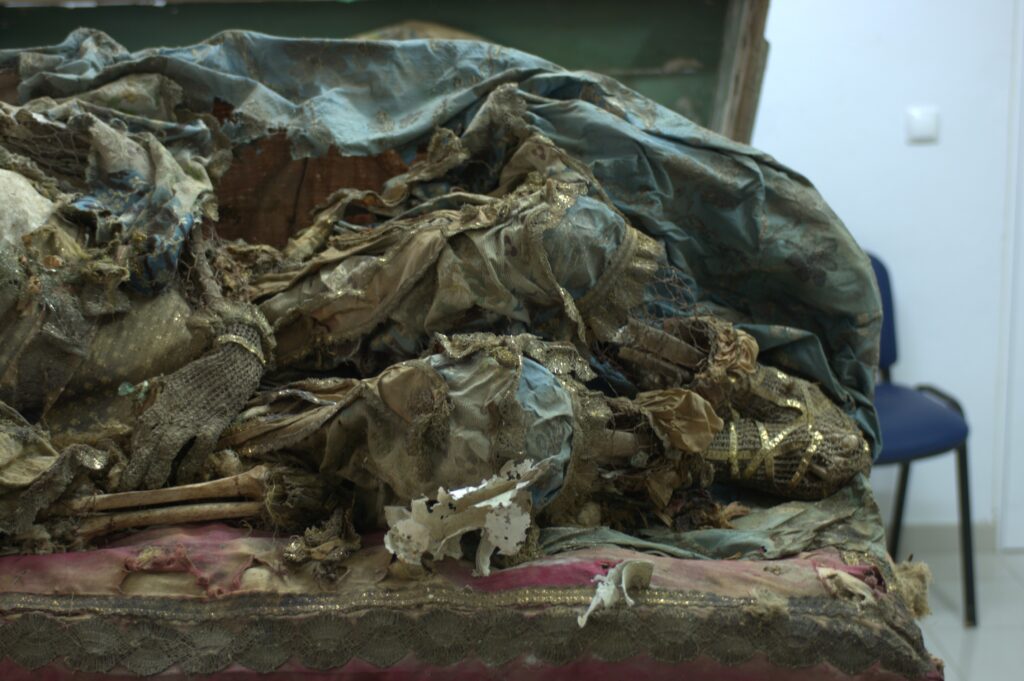
The cranium of St. Semuc was missing. The facial stratigraphy revealed an inner layer of paper, overlaid with various textiles and glued cotton. On top, multiple layers of silk gauze with adhesive were used to shape the facial contours. A metal structure, intended to link and support the bones, is visible beneath these layers. The vertebrae were held together by a thick cable extending from within the cranium, while thinner wires connected the individual vertebrae. In contrast to St. Teodoro and St. Clementia, whose internal metal structures are more stable, St. Semuc’s structure appears disorganised and fragile. This reflects a less precise and rigorous manufacturing process, though the conditions in which the simulacrum was kept over time may also have contributed to its fragile state.
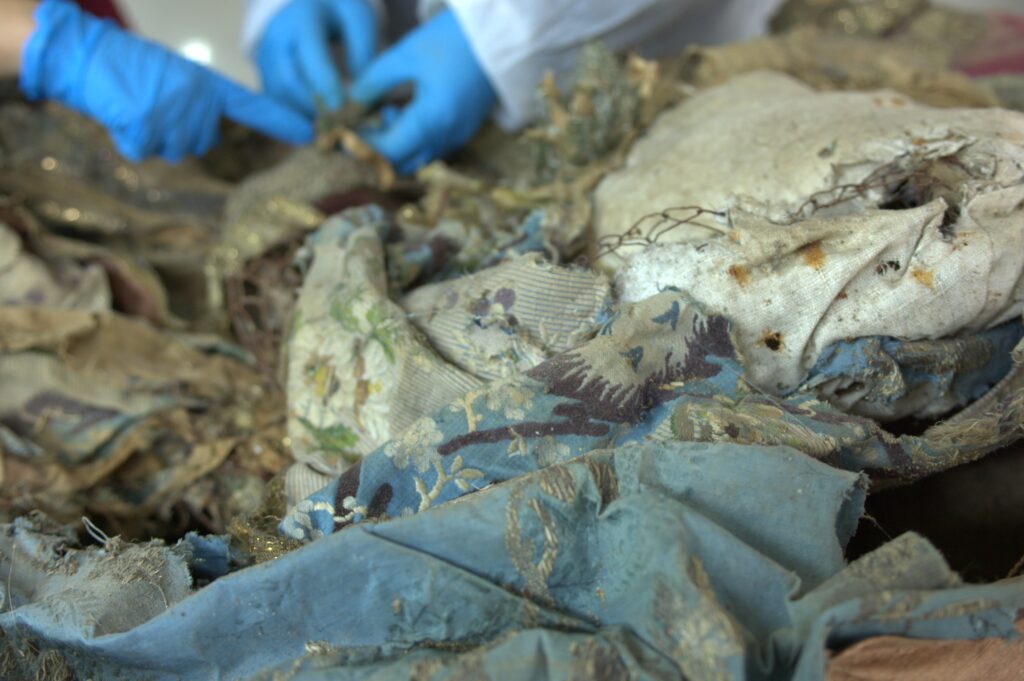
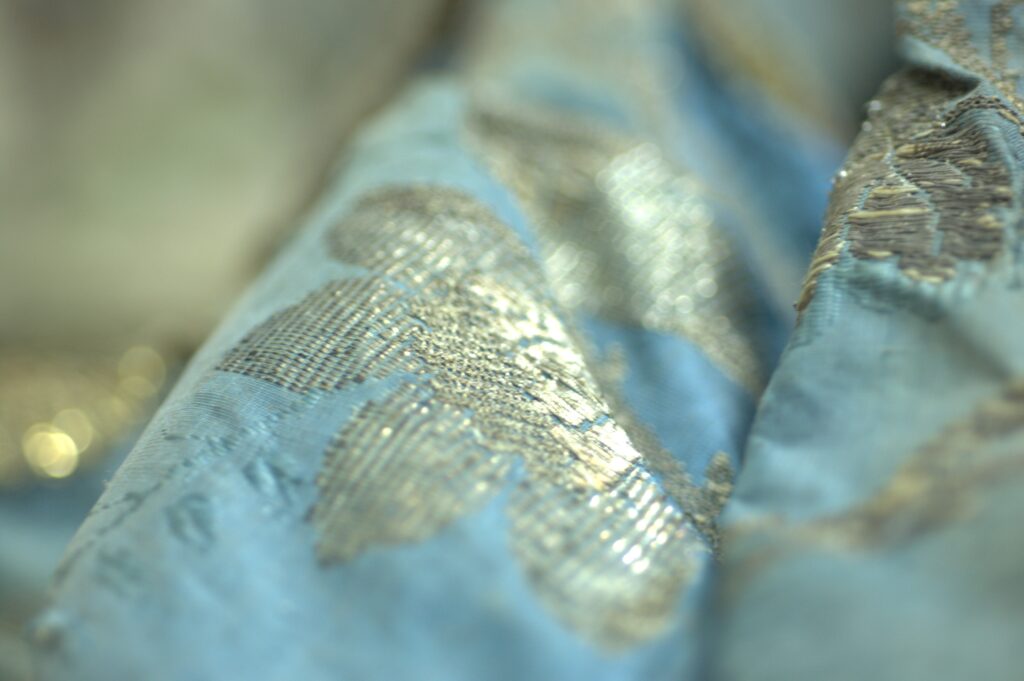
The figured fabrics of this artefact feature….
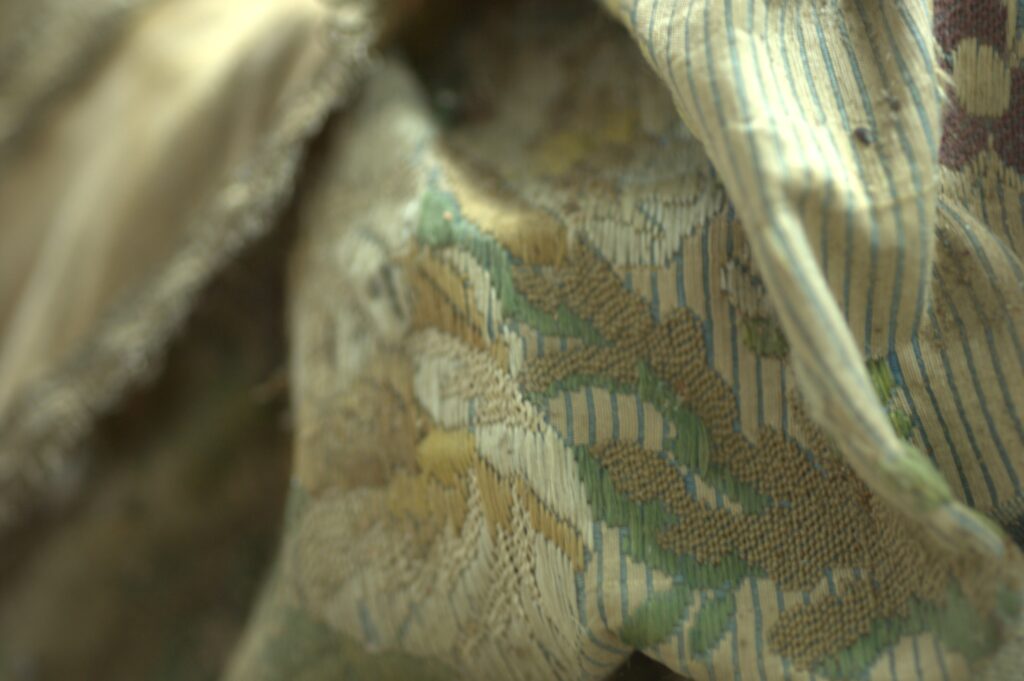
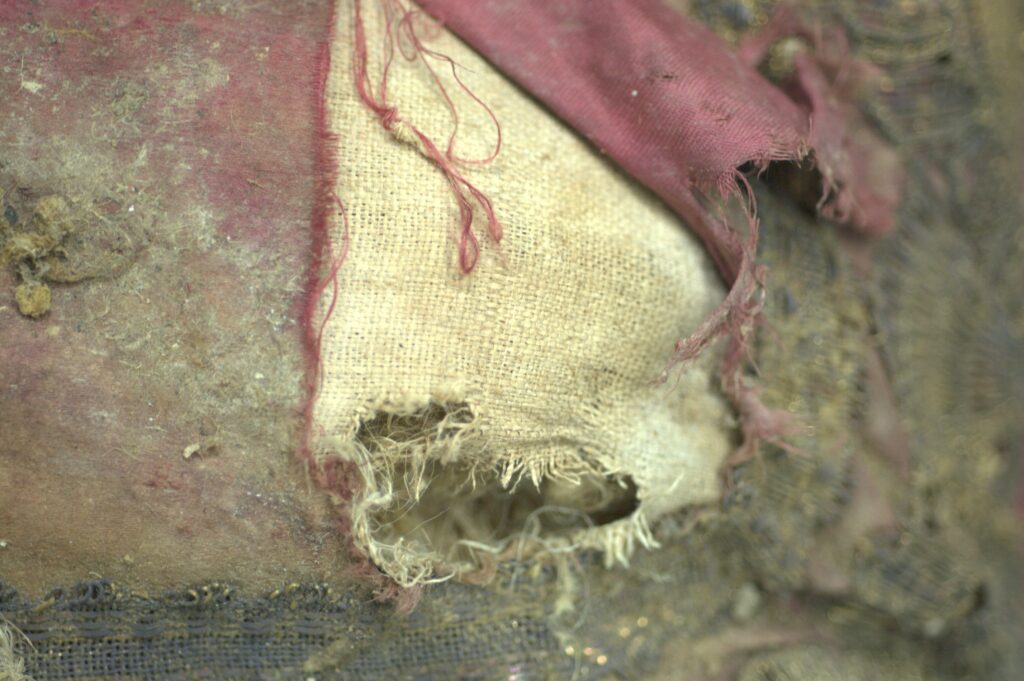
The overall state of conservation of St. Semuc is extremely fragile, with delicate fabrics showing significant damage, including lacunae and tears; the internal metal structure exhibits broken and unstable elements; and the cartouche is heavily deteriorated, marked by numerous losses and torn sections likely caused by small ruminant animals.